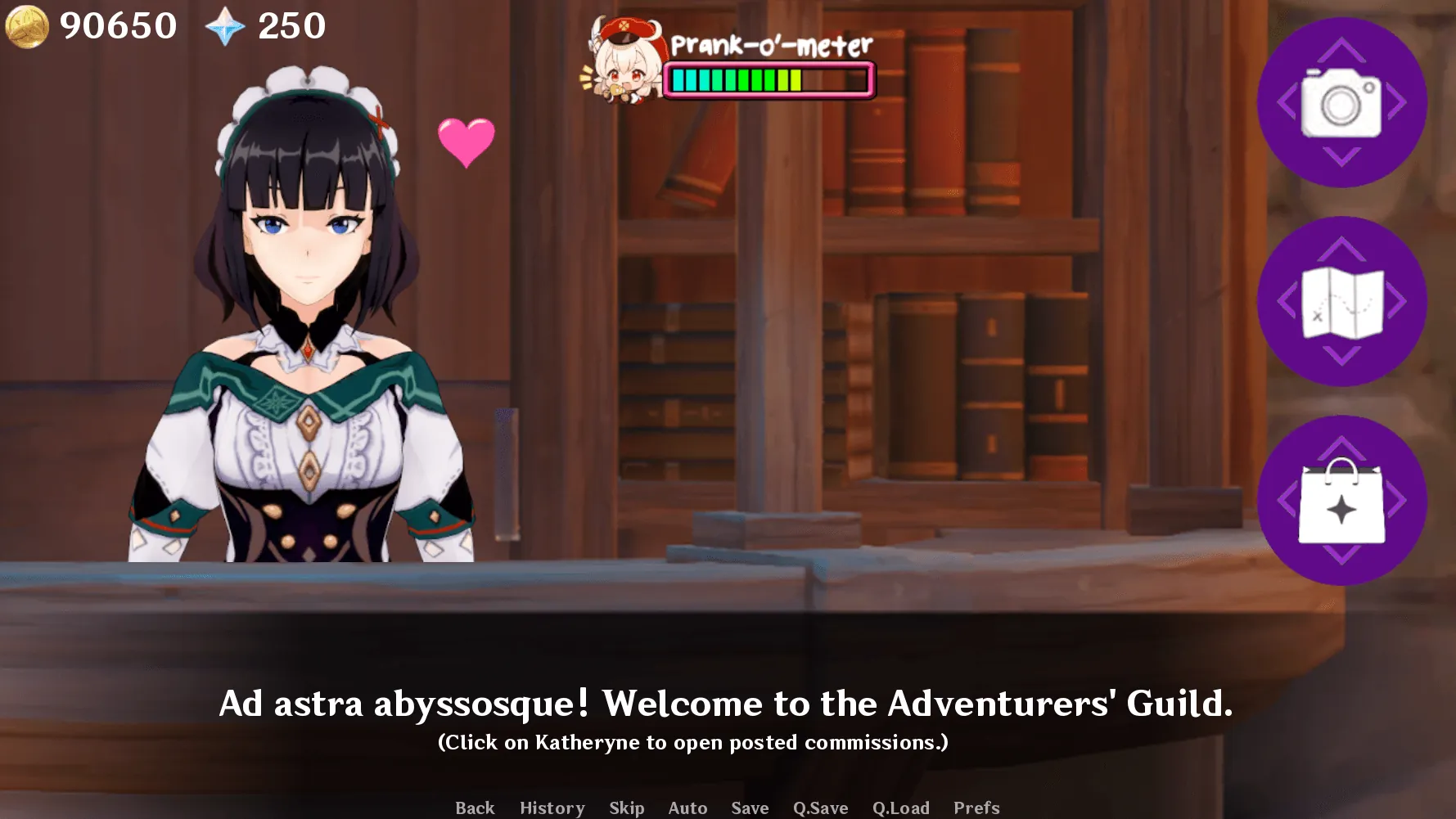
A Foreign World
Play A Foreign World
A Foreign World Screenshots
























A Foreign World review
Explore the immersive narrative and meaningful choices in this interactive adventure game
A Foreign World stands out as a captivating interactive visual novel that redefines storytelling in the gaming medium. Unlike traditional games where you’re cast as a prophesied hero, this experience places you as an ordinary traveler mysteriously transported to a beautiful yet crumbling realm. Your journey isn’t about saving the world through predetermined heroics—it’s about genuine human connection and the real consequences of your choices. The game brilliantly weaves immersive storytelling with engaging mechanics, creating a narrative experience where your decisions authentically shape the political landscape and determine the fates of those around you. Whether you’re drawn to deep narrative journeys or interactive adventures, A Foreign World delivers a compelling experience that explores what it means to be a stranger in a strange land.
Understanding A Foreign World’s Narrative Structure
Ever found yourself clicking through a visual novel, feeling like your decisions are just decorative? 🤔 You pick a snarky reply, the love interest blushes, and you move on. It’s fun, but deep down, you wonder if it really mattered. What if a game remembered every single choice, not just the big ones, and wove them into the very fabric of its world? That’s the promise A Foreign World delivers on, and it all starts with its masterfully crafted narrative structure.
Unlike stories where you’re the prophesied hero, here you are simply a traveler. You’re not there to save the world because you were chosen; you’re just trying to navigate it, understand it, and hopefully, find your place within it. This grounded premise is the bedrock for one of the most authentic and reactive interactive visual novel story arcs I’ve experienced. The game doesn’t just tell you a tale—it builds a unique one with you, piece by consequential piece. Let’s pull back the curtain on how it all works.
The Three Core Story Arcs
The journey in A Foreign World isn’t a random stroll. It’s a carefully paced, emotional pilgrimage divided into three distinct acts. Each act builds upon the last, transforming your role from a clueless outsider to someone whose voice can sway nations. This tripartite A Foreign World narrative structure is the engine of its immersive power.
The Arc of Survival: Finding Your Footing 🏕️
Your first hours are defined by vulnerability. You’re cold, hungry, and bewildered by customs that make no sense. Is that gesture a friendly greeting or a deadly insult? Is that fruit safe to eat? This arc is intensely personal. The meaningful choices in visual novels here are about instinct and immediate need. Do you trust the lone scout who finds you, or do you hide and attempt to steal supplies from their camp? These aren’t grand political maneuvers; they’re human decisions about safety and trust. The game makes you feel the weight of being a stranger, grounding the entire epic that follows in a relatable struggle. You’re not thinking about kingdoms—you’re thinking about where you’ll sleep tonight.
The Arc of Connection: Weaving Your Web 🤝
Once you’ve secured basic safety, the world opens up. You’ll encounter pivotal characters representing the fractured factions of this land: the rigid High Council, the nomadic River-folk, the secretive Archivists. This is where A Foreign World character relationships become your primary tool and weapon. Building rapport isn’t about picking the right flirtatious dialogue option; it’s about demonstrating understanding, aligning with their values, or sometimes, cleverly challenging them. Investing time in an Archivist might unlock forgotten lore that changes your understanding of a conflict. Earning the trust of a River-folk leader might grant you passage through territories closed to others. Every friendship shifts your standing elsewhere, beginning a delicate dance of branching narrative consequences.
The Arc of Resolution: Reaping the Whirlwind 🌪️
The final act is where every whispered secret, every kept promise, and every broken alliance comes due. The political tensions you’ve been studying—and inadvertently influencing—finally erupt. Your role transforms from observer and connector to active catalyst. The missions available to you, the allies who heed your call, and the doors that are irrevocably slammed shut are all direct results of your journey through the previous arcs. This leads to A Foreign World story endings that feel truly earned. There’s no deus ex machina or “good/bad” binary. You’ll witness an ending that is a direct, logical, and often poignant reflection of the person you chose to become in this foreign world.
To see how these arcs work in harmony, let’s break them down side-by-side:
| Story Arc | Primary Focus | Key Player Activities | Narrative Purpose |
|---|---|---|---|
| The Arc of Survival | Personal Safety & Basic Understanding | Learning customs, securing resources, making instinctive trust decisions | To ground the player, build empathy, and establish the stakes of the world from a personal level. |
| The Arc of Connection | Relationship Building & Faction Politics | Engaging in character-specific quests, choosing which factions to aid, gathering intelligence | To expand the player’s influence, complicate loyalties, and set the stage for the coming conflict. |
| The Arc of Resolution | Culminating Conflict & Legacy | Mobilizing allies, making final strategic choices, navigating the climax | To deliver a consequential, personalized ending that validates all preceding choices. |
How Your Choices Shape the World
This is where A Foreign World transitions from a great story to a groundbreaking choice-driven narrative game. The philosophy is simple yet radical: there are no “illusion of choice” moments. The game has a formidable memory.
Think of it like a stone dropped in a pond. A single action creates ripples that touch distant shores. A small act of kindness—like returning a stolen family heirloom to a low-ranking guild member—might seem insignificant. But that member may later be in a position to vouch for your character when you’re on trial before the guild’s leadership. Conversely, a pragmatic but cruel choice, like withholding medicine to barter for better gear, might leave a village resentful. Weeks later, when you need to cross that village quickly, you may find the path “mysteriously” blocked by fallen logs, forcing you into a dangerous ambush elsewhere.
Pro Tip: Don’t play trying to “game” the system for a perfect ending. Play authentically. The most rewarding narratives emerge from genuine reactions, not from meta-guessing what the “right” choice is.
Let me give you a concrete example from my own playthrough that illustrates this beautiful, terrifying cause-and-effect chain.
The Cascading Choice Example:
Early on, I met Kaelen, a scout for the militaristic Stoneguard faction. He was interrogating a captured spy from the nature-worshipping Sylvan Circle. The spy, injured and scared, pleaded for mercy. Kaelen was following orders: execute spies. I had three options: endorse the execution (gaining Stoneguard trust), plead for the spy’s life (risking Kaelen’s disdain), or suggest imprisoning the spy for questioning (a neutral, pragmatic path).
I chose to plead for mercy. Kaelen was furious, calling me naive. My standing with the Stoneguard dipped. However, the spy, Elara, was spared and imprisoned. Later, through separate interactions with the Sylvan Circle, I learned Elara was the sibling of a key Circle leader. When I later needed to broker a temporary truce between the Stoneguard and the Circle to deal with a greater threat, my previous act of mercy was the only reason the Circle leader would even speak to me. But the consequence? Kaelen refused to be part of the joint mission, depriving me of a skilled warrior for a crucial battle. One early, emotional decision reshaped my A Foreign World character relationships with two major factions and directly altered the difficulty and outcome of a late-game event. That is the power of branching narrative consequences done right.
Character Relationships and Political Consequences
In most games, relationships are siloed. Your romance with Character A happens in a bubble, separate from your rivalry with Character B. A Foreign World smashes that bubble. Here, every relationship is a political statement.
Your bond with a character is intrinsically linked to their faction, their ambitions, and their enemies. Getting close to the idealistic historian, Maris, of the Archivists will fill your journal with fascinating lore, but it will also make the theocratic High Council view you with suspicion—they believe that history should be controlled. You can’t be best friends with both. This forces you into a deliciously difficult position of defining your traveler’s values and allegiances.
The game masterfully uses these A Foreign World character relationships as the primary levers for the plot. Want to access the sealed library in the capital? You’ll need a High Council sponsor. That requires either impressing a Council member with your piety or having another faction, like the Stoneguard, pressure them on your behalf due to your strong alliance. The political landscape is a living puzzle, and the pieces are the people you befriend or alienate.
This all culminates in the A Foreign World story endings. There isn’t just a “peace” ending or a “conquest” ending. There are endings where you broker a fragile coalition based on the specific friendships you nurtured. There are endings where you help one faction achieve dominance because you believed in their cause (or manipulated them for your own gain). There are even quiet, personal endings where you walk away from the political fray entirely, having only deeply affected the lives of a small group of people. The ending you get is a mirror held up to the sum of your journey’s choices.
The pacing in all of this is deliberate. It lets you sit with characters, learn their stories, and feel the weight of the world before asking you to change it. This slow burn is what makes the explosive climax so impactful. You’re not invested because you were told to care; you’re invested because you built something—friendships, understandings, enmities—with your own two hands.
This meticulous, player-respectful approach to interactive visual novel story arcs is what sets A Foreign World apart. It trusts you with real agency and has the narrative depth to honor every decision you make. It proves that the most compelling stories aren’t just about watching a hero—they’re about discovering, step by meaningful step, what kind of person you are in a world that wasn’t made for you. And that discovery is one you’ll remember long after the final screen fades. ✨
A Foreign World represents a masterclass in interactive storytelling, where the journey of an ordinary traveler becomes extraordinary through meaningful choices and authentic character connections. The game’s three-act structure—survival, connection, and resolution—creates a compelling narrative arc that respects player agency while delivering emotionally resonant consequences. By grounding the experience in human relationships rather than heroic destiny, A Foreign World invites players to genuinely invest in the world and its inhabitants. The political intrigue, character depth, and branching narrative paths ensure that each playthrough feels unique and earned. For those seeking a visual novel that challenges traditional gaming narratives and rewards thoughtful decision-making, A Foreign World offers an immersive experience that lingers long after the credits roll. Dive into this captivating universe and discover how your choices truly matter in shaping a world’s fate.